Seeking MS / PhD research opportunities

From physical
systems to
predictive models.

I’m Masrur, a mechanical engineering graduate from MIST. I combine computational mechanics, physics-informed learning, and hands-on fabrication to study how structures are designed, made, and understood.

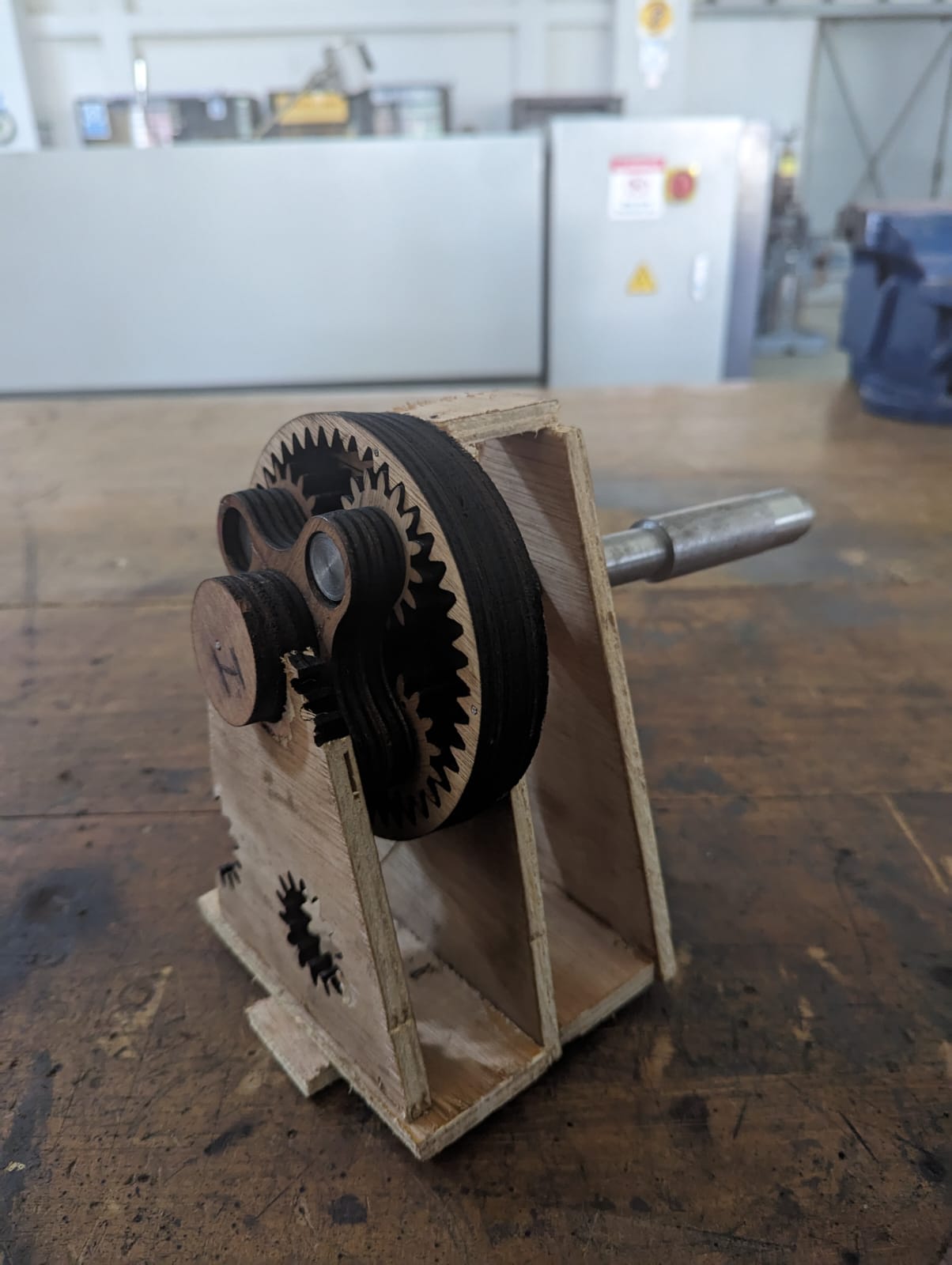
Wooden planetary gear mechanism fabricated and assembled as a MIST team projectDesigned · fabricated · tested
Planetary gear system / MIST team projectDhaka, Bangladesh
EducationB.Sc. Mechanical Engineering · MIST
Academic recordGPA 3.76 / 4.00
GRE Quantitative: 162 · Total: 310+
RecognitionDean’s List · 2022 & 2026
Research directionMechanics × computation × experiments
01 / Selected research

Models grounded
in physical evidence.

My work connects structural optimization and learning with the practical constraints of fabrication and mechanical testing.

01
Conference work · Public preprint

Stress-aware topology optimization & lattice fabrication

A computational pipeline from topology-optimization density fields to variable-thickness lattices and manufacturing toolpaths.

Topology OptimizationPythonLattice structuresMechanical testing

Contribution. Developed density parsing, k-d tree interpolation, lattice generation, and image-based toolpath preparation to connect optimized structures with physical fabrication.

Evidence. 3D-printed specimens and bending tests compared load capacity, stiffness, and energy absorption across lattice architectures.

Read the public preprint ↗
Citation & publication status

Hasan, M., Shahid, S. T., & Helal, M. A. B. A Workflow for Stress-Aware Topology Optimization and Fabrication of Lattice Structures by Additive Manufacturing. ICME 2025; preprint available on SSRN (2026). DOI: 10.2139/ssrn.6248518.

This is a public preprint, not a claim of journal acceptance.
02
Submitted manuscript · Engineering Reports

Solver-in-the-loop learning for topology optimization

Representation-aware physics supervision for graph and grid surrogates, with gradient diagnostics and connectivity-safe reconstruction.

Graph neural networksU-NetDifferentiable solversPCGrad

Research question. When does adding a structural loss improve a surrogate, and when does its gradient overwhelm the data objective?

Contribution. Compared graph and grid representations, examined gradient conflict, and used graph search to repair disconnected load paths before fabrication.

Scope, evidence & limitations

Full title: Representation-Aware Solver-in-the-Loop Learning for Topology Optimization: Graph-to-Grid Gradient Surgery, Connectivity-Safe Reconstruction, and Physical Validation.

The supplied manuscript reports a verified single-seed PCGrad experiment across 500 evaluation cases and one printed specimen per design. Continuous solver results, thresholded connectivity, and physical response are evaluated separately. Replication across seeds and specimens remains necessary.

Submitted to Engineering Reports; acceptance has not been established. Manuscript available on request.

03
Submitted manuscript · Advances in Materials Science and Engineering

Architecture-dependent calibration of printed structures

Testing whether a voxel-FEA correction calibrated to one FDM architecture transfers to another.

Voxel FEAFDM / PLAAnisotropyModel calibration

Contribution. Combined active-mask topology optimization, compression measurements, response-specific calibration, and architecture screening to study simulation-to-experiment mismatch.

Finding. Agreement with one calibration geometry did not establish transferability to another—a question I want to pursue in trustworthy digital twins.

Scope, evidence & limitations

Full title: Architecture-Dependent Mechanical Response and Voxel-FEA Calibration in Topology-Optimised FDM Structures.

The supplied manuscript uses one topology-optimized PLA specimen and one matched-volume control, plus numerical screening and published lattice cases. Effective corrections depend on response, architecture, and resolution; they are not universal material constants.

Submitted to Advances in Materials Science and Engineering; acceptance has not been established. Manuscript available on request.

02 / Where I want to go next

Research directions.

Building on my existing work in structural modeling, learning, fabrication, and validation.

I.

Fracture mechanics
& structural failure

I want to investigate how manufacturing-induced anisotropy and geometric features affect damage and failure, and how physics-guided models can support their prediction.

Developing interest · Future research
II.

Digital twins
& model updating

I’m interested in connecting experimental measurements with computational models, studying parameter identification, uncertainty, and transfer across operating conditions.

Developing interest · Future research
III.

Intelligent mechanical
& robotic systems

I want to connect mechanical design, sensing, and learning with control. My starting points are an embedded robot prototype and an aerial perception pipeline.

Existing project foundation · Research interest
03 / Engineering in practice

Built, programmed,
and put to work.

Selected projects showing the practical engineering and computational skills behind my research interests.

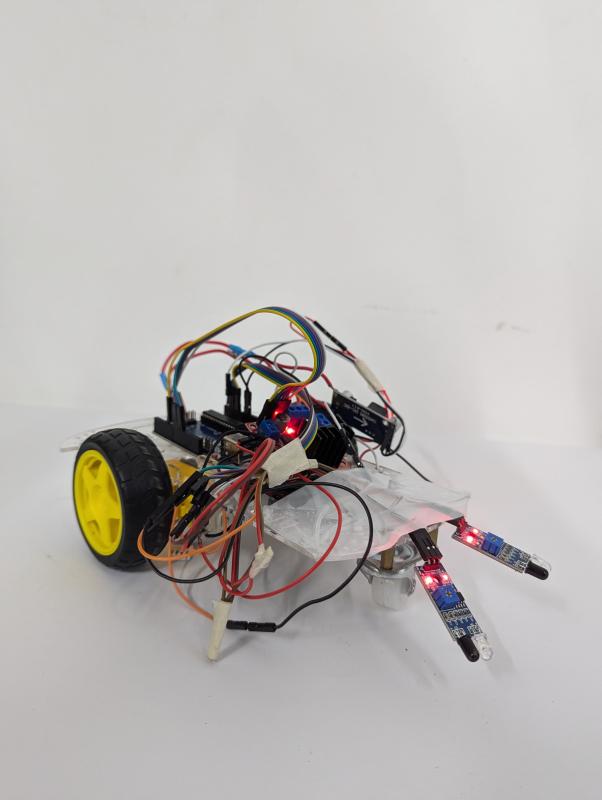
Arduino mobile robot with two infrared sensors and differential-drive wheels
Embedded systems / Coursework

Obstacle-avoiding
mobile robot

Arduino firmware, dual IR sensing, PWM motor commands, and timed avoidance maneuvers in a physical prototype.

Explore the project ↗
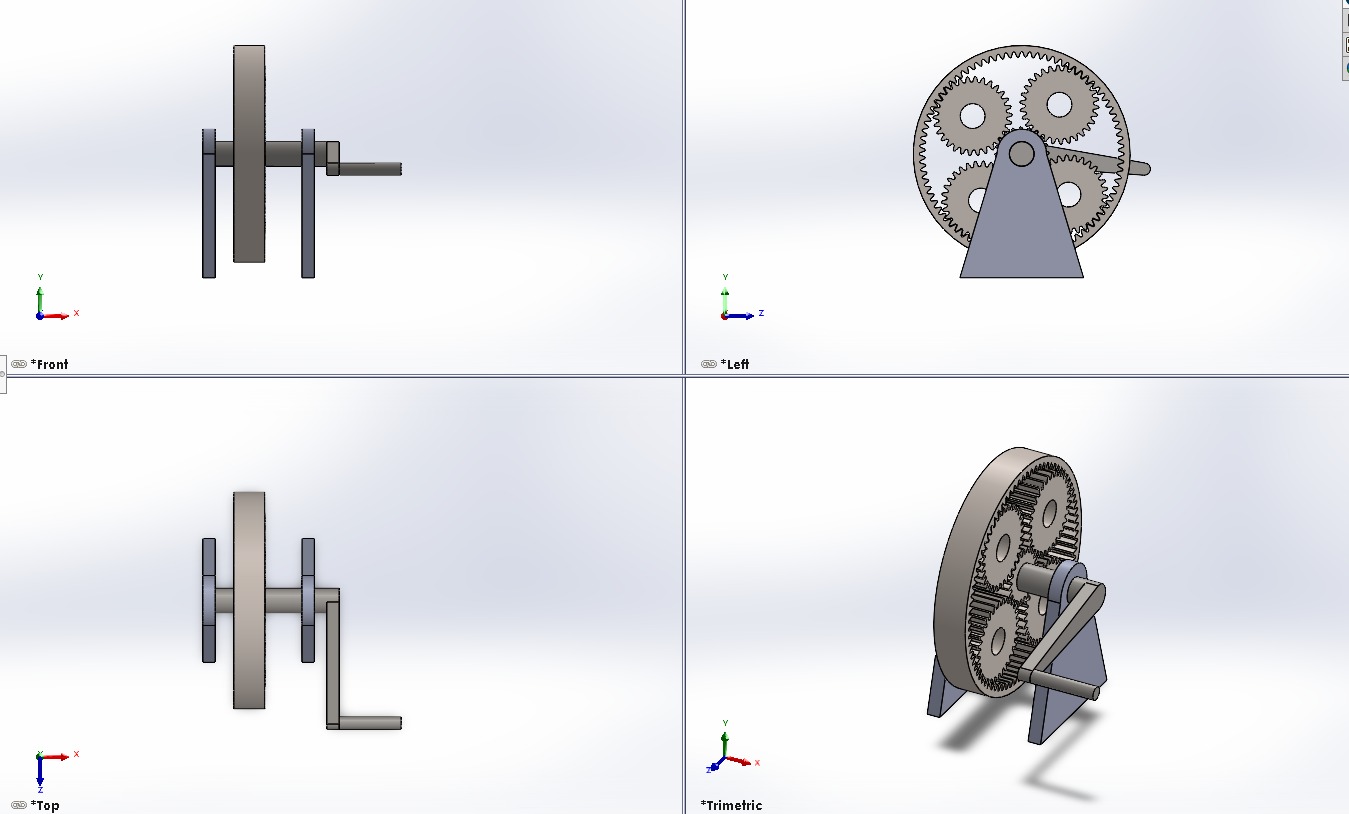
Four SolidWorks views of a planetary gear assembly
Mechanical design / Team project

Wooden planetary
gear mechanism

SolidWorks design, laser-cut gear profiles, machined shafts, and assembly using reclaimed materials.

See design & fabrication ↗
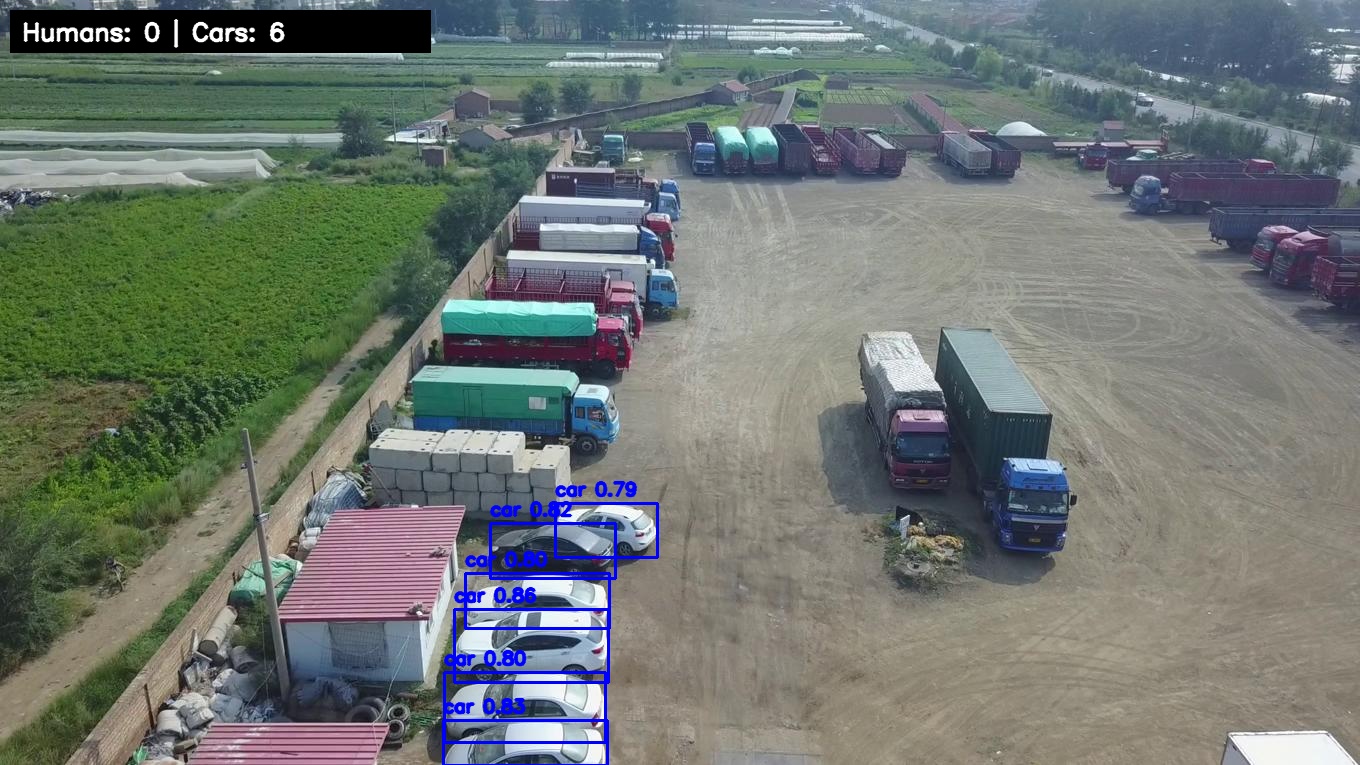
Aerial image with model-generated person and vehicle detection boxes
Computer vision / ML project

Aerial detection
& object counting

A YOLO11 pipeline for VisDrone imagery with image-level human and car counts and optional ByteTrack tracking.

View methods & evaluation ↗
Additional machine learning projects

Bangla misinformation classification

ML Zoomcamp capstone using TF-IDF and Linear SVM, with FastAPI, Docker, and Kubernetes deployment configuration. This project demonstrates applied NLP and reproducible model serving.

Heart disease classification

ML Zoomcamp project using the Cleveland dataset, tuned Random Forest models, a Flask API, and Docker. An educational classification project; clinical validation is outside its scope.

04 / About me

A mechanical engineer
who works across
models and machines.

I earned my B.Sc. in Mechanical Engineering from the Military Institute of Science and Technology in Dhaka, Bangladesh, with a GPA of 3.76/4.00. My undergraduate thesis developed an integrated topology-optimization pipeline for additive manufacturing.

I bring experience in computational design, research software, prototype fabrication, and mechanical testing. An industrial attachment at BanglaCAT gave me additional exposure to engine servicing and industrial mechanical systems.

I am seeking research-based MS or PhD opportunities in computational mechanics, physics-informed learning, structural optimization, and intelligent mechanical systems, with a growing interest in fracture mechanics and digital twins.

Mechanics & design

Finite element analysis · Topology Optimization · Structural Simulation · Additive manufacturing · Mechanical testing

Software

MATLAB · SolidWorks · ANSYS Structural · Abaqus (Beginner)

Computation & learning

Python · Scientific computing · GNNs / CNNs · Scikit-learn · Computer vision

Physical systems

Arduino / Embedded C++ · Sensor interfacing · PWM actuation · Machining & assembly

Research practice

Ablation studies · Model calibration · Error analysis · Experimental comparison

05 / Let’s connect

Looking for a research
group to contribute to.

I welcome conversations about funded MS/PhD positions and research projects connecting mechanics, computation, and experimental evidence.